Navigating the New Regulatory Landscape Post-2026 Midterm Elections
Following the results of November 3, 2026’s mid-term elections, many community bankers and colleagues throughout the financial services industry are understandably...

Following the results of November 3, 2026’s mid-term elections, many community bankers and colleagues throughout the financial services industry are understandably...
On June 5, 2026, the U.S. Treasury’s Financial Crimes Enforcement Network (FinCEN), together with the primary federal banking regulators, issued a joint advisory...
The joint agencies finally issued the final CRA rule to modernize regulations implementing the community reinvestment act. To bankers, the most important aspect of this rule might be that it solidified consistency between the agencies. As background, in 2020 the OCC released its own CRA rule, which it rescinded in December, 2021 to the relief of many. On May 5, 2022, the joint agencies released a notice of proposed rulemaking (NPR) to strengthen and modernize the Community Reinvestment Act (CRA) regulations to better achieve the purpose of the CRA. We saw the results of that rulemaking yesterday.

On Monday, a federal judge granted an injunction against the CFPB’s enforcement of Dodd-Frank’s 1071 Rule. The basis that the funding of the CFPB is not constitutional, which is currently being litigated in a separate case. What this means is that the rule will be suspended until the Supreme Court decides the case. This injunction only applies to member of American Bankers Association and Texas Bankers Association, as well as Rio Bank of Texas.
While most Compliance Officers think of the FCC when they think about TCPA, there are a handful of states that have enacted their own mini-TCPA laws and regulations. These state-level requirements for TCPA are generally stricter than federal requirements and center around such topics as timing for calls, frequency of calls, and what is considered an auto dialer. As background, the Supreme Court in 2021 narrowed the definition of an ATDS (automated telephone dialing system), which spurred some states to enact their own laws. Some states had laws on the books prior to that, too.
Keeping up with changes in regulations and guidance can be a difficult task for a new compliance professional, especially in smaller institutions that don’t have a large compliance department. It can be difficult reading through new regulations and guidance to figure out how to respond. In this article we’ll walk the new compliance professional through a recent piece of guidance, and advise on what a good approach would be for that new compliance professional to respond.

Several regulatory agencies on June 1st issued a Notice of Proposed Rulemaking (NPRM) and request for public comment regarding Automated Valuation Models (AVMs) used in residential lending — by mortgage originators and secondary market issuers. The NPRM is specific to real estate transactions for a consumer’s principal dwelling.
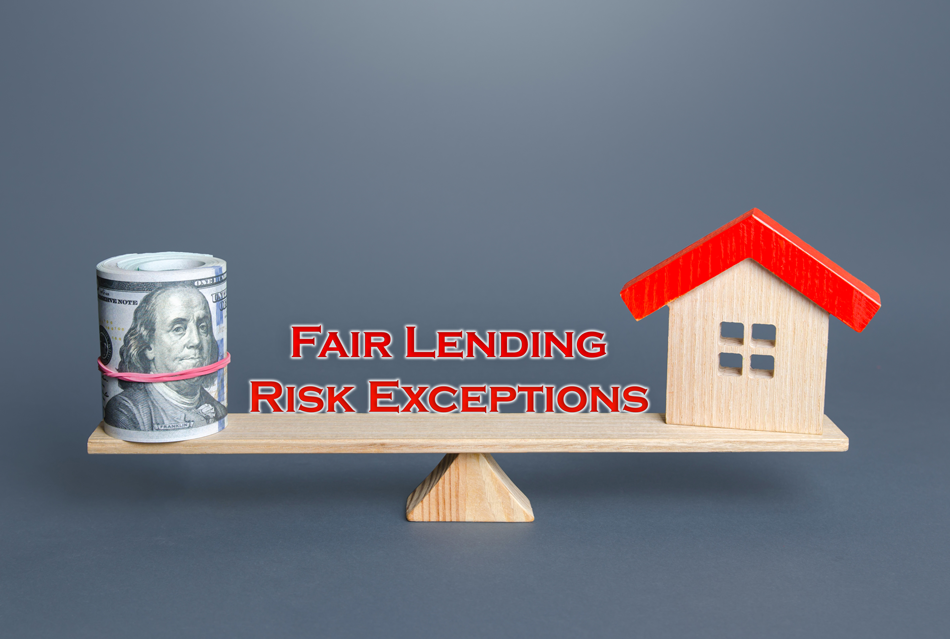
Assume you’re a Fair Lending Officer in the 2nd line of defense in a large community bank (between $5 billion and $9 billion in assets for the purposes of this article). You heard at a recent conference that some of your peers are reviewing residential mortgage loans for exceptions, or anything else that could indicate Fair Lending risk, and they are performing this review every 3 to 6 months. You listen to the observations they’ve been seeing and think to yourself that this is a review you could add to your inventory of Fair Lending reviews/monitoring that you perform in the 2nd line.
If asked “Who is a Servicemember?” most compliance professionals might go the citation (50 USC 3911(1)) and read the definition of a Servicemember. Alternately, a compliance professional might say “We just query the Department of Defense (DoD) database to find out if someone’s a Servicemember. While this is excellent, it might not be enough.
Consumer Compliance professionals who’ve been practicing their art since 2010 likely remember the day that “extra A” helped UDAAP become famous. That “extra A” was for the new Abusive standard that joined the standards of Unfair and Deceptive to become what we call UDAAP – Unfair, Deceptive, or Abusive Acts or Practices.